
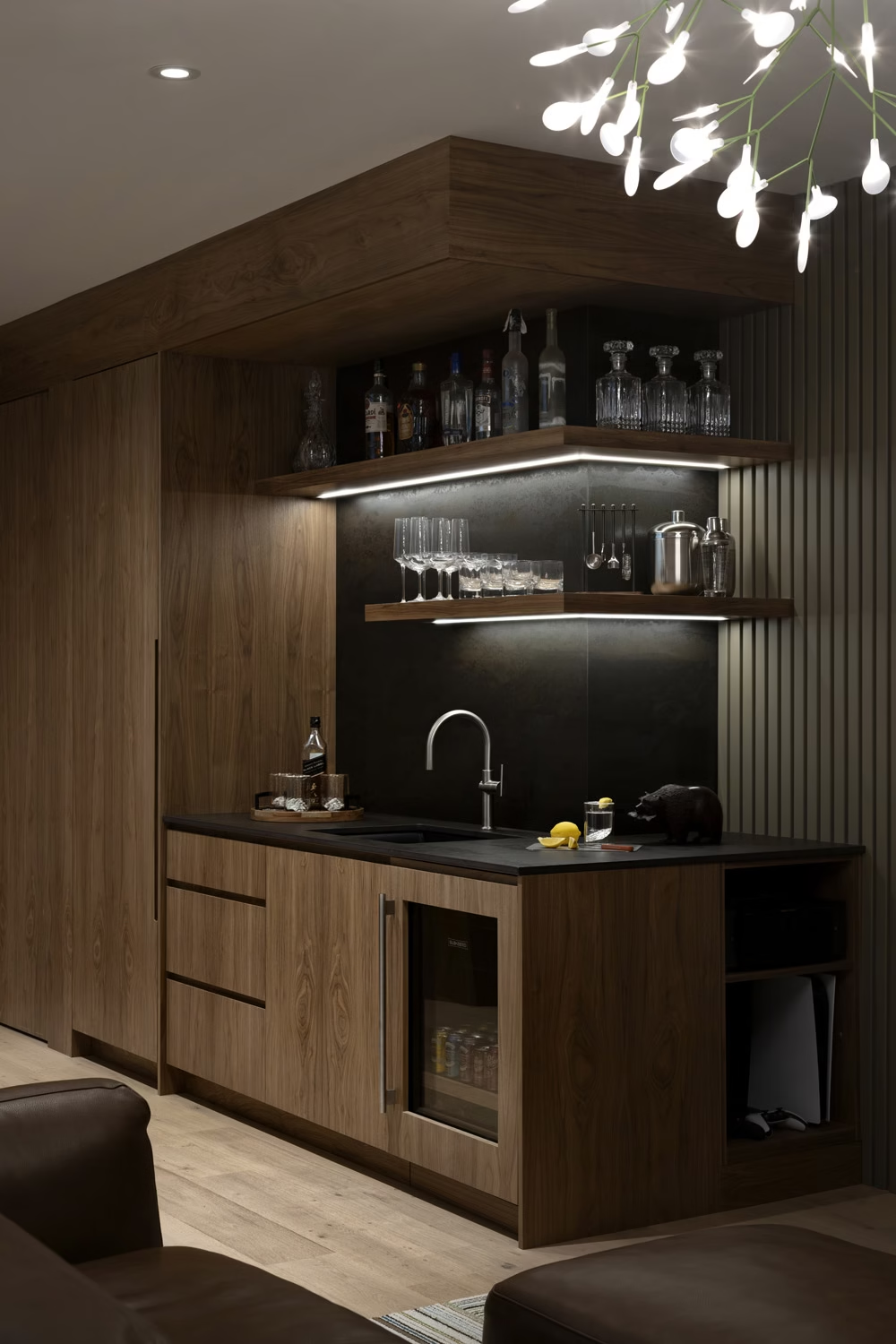
At Fayzebuilt, we believe a home should reflect how you live, move, and gather—a space that feels right at home from the ground up. That’s why we approach every custom build with a meticulous, phased process that blends timeless craftsmanship, open communication, and respect for your vision. Below, we walk through the full journey of building a custom home, so you can make informed, confident decisions every step of the way.
The Custom Home Process, Fayze by Fayze
Phase 1: Pre-Construction and Planning
This foundational phase begins long before any physical work. It includes extensive research, decision-making, and assembling a capable team.
- Initial Research and Vision: Begin by exploring home designs and layout options that suit your lifestyle. Develop a wishlist that includes room adjacencies and features that support how you live and move through your home.
- Budgeting: Set a realistic budget range with a contingency of at least 20%. Factor in overlooked costs such as permitting, landscaping, temporary accommodations, and energy code compliance.
- Land Acquisition and Site Evaluation:
- Scout land for frontage, utility access, and zoning potential.
- Commission a legal survey and conduct a detailed soil/site review for slope, erosion, permeability, water table depth, and septic suitability. This step is essential for assessing feasibility and preventing future issues.
- Hiring the Professional Team:
- Builder/General Contractor: Bring a custom home builder on early to leverage their insight into costs, timelines, and feasibility.
- Architect/Designer: Your architect will translate your goals into form and function, starting with sketches and evolving into detailed plans.
- Specialist Consultants: You may need a geotechnical engineer, structural engineer, surveyor, and energy advisor depending on site complexity.
- Financing and Legal Prep:
- Secure construction-to-permanent financing. Funds are usually released in stages aligned with construction milestones.
- Conduct a title search and review all loan documentation with your lawyer.
- Architectural Design Phases:
- Pre-Design: Establish goals, priorities, and site opportunities.
- Schematic Design: Explore multiple layout options, daylighting, and massing studies.
- Design Development: Confirm materials, window systems, building envelope, and refine floor plans.
- Permit Set: Submit detailed drawings for municipal approvals. In BC, Owner-Builders must pass an exam and gain authorization.
SEE ALSO: Lowdown on Building a secondary suite on your property
Phase 2: Site Preparation and Foundation
- Clearing and Access: Remove vegetation or old structures, grade the land, and prepare access roads or staging zones.
- Utilities and Temporary Services: Install temporary power and water, dig wells or set meters, and run trenching for sewer and gas.
- Excavation and Foundation:
- Dig and pour footings, form and waterproof foundation walls, and backfill appropriately.
- Slab foundations require plumbing rough-ins before pouring.
Phase 3: Framing and Rough-Ins
- Framing: Build out subfloors, walls, joists, and roof framing. Ensure squareness and level throughout.
- Envelope: Sheath walls and roof to prepare for weatherproofing.
- Windows and Doors: Install all exterior units.
- Mechanical Rough-Ins:
- Plumbing: Install water and waste systems.
- HVAC: Run ductwork and ventilation systems.
- Electrical: Complete wiring for outlets, lighting, and controls.
- Inspections: Framing and systems must pass inspection before continuing.
Phase 4: Exterior and Interior Finishing
- Envelope Completion: Install roofing, siding, gutters, and downspouts.
- Insulation and Drywall: Meet energy code standards. Hang, mud, and sand drywall.
- Interior Finishing:
- Trim, cabinetry, flooring, tiling, and painting.
- Install electrical and plumbing fixtures.
- Exterior Completion: Finish landscaping, walkways, driveways, and any exterior paint or coatings.
Phase 5: Final Stages and Move-In
- Utility Hookups and Final Systems Testing: Activate services and ensure systems function as designed.
- Final Inspections and Approvals: Conduct municipal walkthroughs.
- Construction Administration: Your design team may assist with RFIs, site reviews, and drawing revisions.
- Occupancy and Close-Out: Move in with confidence, supported by a warranty and documentation package.
Choosing a Builder: Vetting the Right Partner
A strong contractor relationship is foundational. Ask detailed questions around:
- Credentials: How long have you worked locally? Are you licensed and insured?
- Experience: Do you have a relevant portfolio? What differentiates you from others?
- Operations: How do you manage subcontractors? How do you control quality and costs?
- Communication: Who provides updates? What is your client relationship style?
- Legal and Risk: Have you faced disputes or liens? What warranty coverage is included?
Visit active job sites to observe cleanliness, safety, and team organization. Speak directly with past clients and dig into reference checks.
Owner-Builder vs General Contractor
Being an Owner-Builder in BC requires an exam and legal compliance. While some savings are possible, drawbacks include:
- Time-intensive scheduling and coordination
- Difficulty securing top trades
- Liability for defects up to 10 years
- High stress, especially for first-timers
Most clients find value in a skilled GC who ensures continuity, quality, and peace of mind.
Understanding Costs, Contracts, and Financing
Contract Types
- Fixed Price: Clear pricing with low risk but less flexibility.
- Cost Plus: Transparency and adaptability but less cost certainty.
Choose based on your risk tolerance, level of involvement, and design fluidity.
Hidden Costs to Account For:
- Municipal Development Cost Charges (DCCs)
- Unexpected Site Work (blasting, drainage fixes)
- Utility Hookups (BC Hydro, FortisBC)
- BC Step Code Compliance (windows, HVAC, insulation)
- Landscaping and retaining walls
- Hazardous material removal in teardowns
- Rent and storage during delays
- 5% GST on new builds (with limited rebates)
- Upgrades beyond base specs (appliances, window coverings)
- Consultant Fees (surveyors, engineers, arborists)
- Soft Costs (real estate, design, taxes)
Construction-to-Permanent Loans
- Funds released in phases
- Converts to long-term mortgage upon completion
- Requires updated credit and income documentation at conversion
Construction Contracts: Key Clauses
- Indemnity and Liability: Know who carries what risks.
- Force Majeure: Defines protection from delays due to uncontrollable events.
- Liquidated Damages: Pre-agreed penalties for missing deadlines.
- Warranty Provisions: Set expectations for post-move-in fixes.
- Caps and Carve-Outs: Watch for limitations on contractor liability.
Design, Planning, and Building Methods
Design Literacy
Learn to read plans to make timely decisions: – Walls = parallel lines; breaks = openings – Stairs = rectangles and arrows – Dimensions = string lines with hash marks – Notes = ceiling heights, room volumes, and open-to-below areas
Building Methods
| Feature | Site-Built | Modular | Manufactured |
| Built | On-site | In sections, then placed | Fully factory-built |
| Timeline | 6 mo – 2 yrs | 2 – 6 months | 2 – 4 months |
| Customization | Unlimited | Modular constraints | Pre-designed |
| Cost | Highest | Mid-range | Lowest |
| Quality Standards | Local codes | Local codes | HUD code (federal) |
| Value Appreciation | Strong | Strong | Limited |
Sustainable Practices & Energy Efficiency
We design with BC Step Code, Built Green, and Passive House principles in mind: – Passive solar and strategic shading – High R-value insulation and air sealing – Efficient mechanical systems – Solar-ready and water capture setups – Reuse of materials and local salvage
AI-supported tools now assist in predicting energy performance and retrofit potential, helping us design smarter homes from the outset.
Final Thoughts
A well-built home grows from hundreds of small, thoughtful choices. At Fayze Built, we guide you through each one with clarity and care—balancing design, function, and budget in every step. Whether you’re building for family, legacy, or lifestyle, our team is here to help you build the place that feels just right.