
The Lowdown on Building a Secondary Suite in Victoria
IN today’s journal we are giving you The Lowdown On Building A Secondary Suite On Your Property, With Design Ideas too
If you own property in Greater Victoria, you already know the math has shifted. The benchmark price for a single-family home in the Victoria Core sits just over $1.3 million — and for many homeowners, the question isn’t whether to build, it’s how to make their existing property work harder. A secondary suite is one of the most direct answers to that question: rental income, multi-generational living, or flexible space that adapts as your life does. And right now, the zoning window across Greater Victoria is more open than it has ever been.
What Makes a Secondary Suite Different
Secondary suites transform ordinary properties into homes that work harder for the families who live in them. These spaces offer flexibility while creating housing options that strengthen communities. Understanding what makes them unique helps you envision how they might enhance your property.
The essential characteristics
A secondary suite provides everything needed for independent living — sleeping areas, kitchen facilities, bathroom, and private entrance — while remaining connected to your principal dwelling. The key lies in their relationship: always smaller than and subordinate to the main house.
Requirements include:
- Separate entrance from the principal dwelling (either exterior access or via a common indoor landing)
- Private kitchen facilities
- Bathroom facilities
- Dedicated sleeping areas
- Floor area smaller than the principal dwelling
This arrangement creates something deeper than additional square footage. Secondary suites form a single real estate entity with the main home, preventing legal division through condominium conversion or subdivision. Most regulations permit only one secondary suite per property — though as we’ll cover below, recent zoning changes in Victoria and Saanich have expanded what’s possible for many homeowners.
The beauty lies in their permanence: these spaces become part of your home’s story, not separate from it.
Suite versus unit — why it matters
The distinction shapes everything about your project. A secondary suite remains part of the same property as your principal dwelling, both together constituting a single real estate entity.
Duplexes and side-by-side units operate differently — they’re considered separate primary uses, with neither unit subordinate to the other. Secondary suites carry specific dimensional restrictions that maintain their accessory status. They cannot exceed the principal dwelling’s size and resist separation through legal subdivision. This creates advantages for homeowners seeking rental income without property subdivision, or those wanting nearby housing for family members.
Three paths forward
- Basement suites represent the most common approach.
- Garden suites stand as detached structures in your backyard — sometimes called granny flats or in-law suites, these ground-level dwellings provide privacy and independence that attached options cannot match.
- Laneway houses position themselves along the back lane of your property, offering urban appeal while maximising previously underutilised rear space.
Great homes grow from many small pieces. Secondary suites represent a thoughtful approach to increasing housing density while preserving neighbourhood character.
Permits, Zoning, and Legal Foundations — What’s Changed in Greater Victoria
The legal groundwork shapes everything that comes after. Build without proper approvals and you risk costly corrections, or being forced to remove your suite entirely. We approach regulatory requirements the same way we approach construction: fayze by fayze, with careful attention to each step.
And right now, that regulatory landscape has changed significantly across the region — in ways that open up real possibilities for Victoria-area homeowners.
The provincial baseline: Bill 44
Province-wide, Bill 44 now requires that at least one secondary suite or accessory dwelling unit be permitted on all single-family and duplex lots across British Columbia. The regulatory barriers that historically blocked these builds have largely been removed — meaning if you’ve been waiting, the window is open.
See BC Provincial — Bill 44 / Small-Scale Multi-Unit Housing
Province of British Columbia
What’s changed in Victoria specifically
As of October 2025, the City of Victoria’s updated Official Community Plan and zoning bylaws now allow properties to have both a detached garden suite and an in-home secondary suite on the same lot. This is a significant change — historically, homeowners had to choose one or the other. For properties in the right configuration, this creates the potential for two additional income or family-use units on a single property.
For more details please refer to the City of Victoria website Secondary Suites page. Check your zone via the Zoning Regulation Bylaw or VicMap, confirm eligibility with Development Services, then apply for a Building Permit through Permits and Inspections
Saanich
In Saanich, as of mid-2024, properties zoned RS and RD may now have both a secondary suite and a garden suite on the same lot. If your property falls within these zones, it’s worth confirming eligibility directly with Saanich’s Development Services — this change expanded options considerably for many established neighbourhood properties.
See District of Saanich — Secondary Suites for more info
Rules still vary across the CRD
While provincial legislation has lowered the baseline barriers, requirements still differ between municipalities within the Capital Regional District. Victoria, Saanich, Esquimalt, Oak Bay, and Langford each have their own zoning bylaws, setback requirements, parking provisions, and application processes. Working with a builder who understands the local permit landscape — and has navigated it before — makes a meaningful difference in how smoothly your project moves from concept to occupancy.
Also read: City of Victoria page about Garden Suites. The City’s garden suite page notes that garden suites are permitted on all appropriately zoned properties with a single-family detached home, and that properties with existing secondary suites or an existing duplex are not eligible — though this is the rule that changed with the October 2025 OCP update
Victoria’s permit process
A secondary suite gains legal status in Victoria only when all required building, plumbing, and electrical permits have been approved, all work has been inspected, and a final Occupancy Permit has been issued by the City.
Once eligibility is confirmed, you’ll want to review the Secondary Suite Design Guidelines, the Zoning Regulation Bylaw, and the British Columbia Building Code. Our project managers handle permit submissions and coordination in-house — that’s part of the fayze-by-fayze process.
The permit sequence
At minimum, secure:
- Building permit for structural changes and overall compliance
- Electrical permits for all electrical installations
- Plumbing permits for new fixtures and systems
Two main inspections follow: framing inspection before walls close up, and final inspection once the suite is complete and ready for occupancy.
Starting work without required permits can result in penalties and complications when selling your property. Secondary suites created without proper permitting are not legal dwelling units and are ineligible for rental licences. Contact us for guidance on navigating these requirements with confidence.
Great homes grow from following the proper sequence.
Designing Your Suite: Light, Flow, and Intention
Creating a secondary suite demands more than meeting code requirements. Thoughtful design balances functionality, comfort, and the way a space feels to live in. A well-designed suite considers both future occupants and how this new space integrates with your existing home.
Every design choice shapes how people move through and experience the space.
Separate Entrance and Privacy
The entrance establishes independence for everyone involved. Building codes require all secondary suites to have a separate entrance accessible from outside without passing through the main dwelling. This entrance creates a clear boundary between living spaces while maintaining privacy for all residents.
Consider these entrance approaches:
- A completely separate exterior door
- A shared exterior entrance leading to a common indoor landing where each dwelling maintains its own private door
- Side or rear entrances that offer more discretion than front-facing doors
Privacy extends well beyond the entrance itself. Careful window placement prevents direct sight lines between units. Position windows away from neighboring outdoor living areas, and use landscaping to screen private outdoor spaces. The thoughtful positioning of windows, entrances, and outdoor areas creates comfortable living spaces where everyone feels at home.
Natural Light and Air Flow
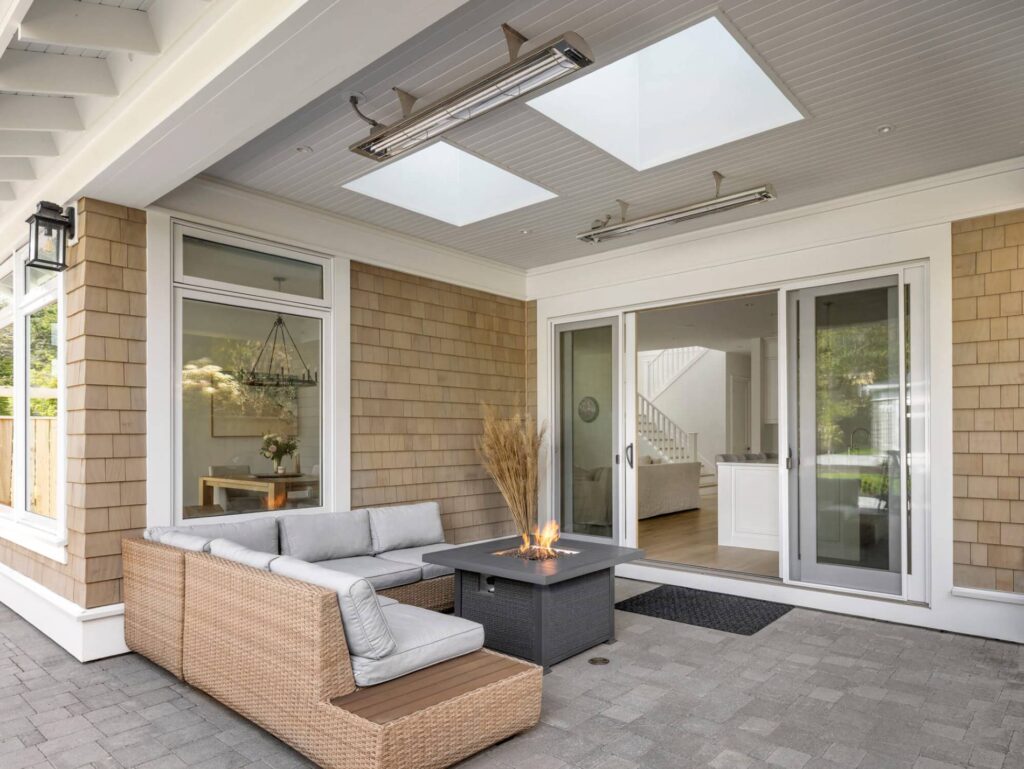
Access to natural light fundamentally shapes the livability of your secondary suite. This matters most in basement configurations, where sufficient illumination often presents the greatest challenge. Living areas should occupy the brightest rooms, with windows strategically placed to maximize sunlight penetration.
For smaller secondary suites, 26 m² or less, at least one large exterior window equal to 15% of the total floor area should be provided. This window should offer direct line of sight to the exterior from at least half the suite’s floor area. Bedrooms require egress windows that allow access and exit during emergencies.

Proper ventilation works hand in hand with natural light. Two widely separated operable vents facilitate good air flow throughout the space. Ventilation requirements include:
- Separate ventilation systems for each dwelling unit
- No air circulation between units, which would compromise smoke-tight separations
- Options like heat recovery ventilators (HRVs) as principal exhaust fans
Higher ceilings and reflective light shelves help draw light deeper into the suite, particularly valuable in basement spaces. These small design moves make a significant difference in how bright and welcoming the space feels.
Soundproofing and Shared Walls
Effective soundproofing enhances quality of life for both homeowners and tenants. Sound transmission falls into two categories: airborne noise from conversations and music, and impact noise from footsteps and furniture movement.
Sound-absorbing material must be installed in walls and floor-ceiling assemblies between the secondary suite and principal dwelling. Several effective approaches include:
- Installing a second layer of drywall to increase mass and block sound waves
- Using specialized soundproof drywall panels engineered for noise reduction
- Adding resilient channels between drywall and wall studs to isolate sound vibrations
- Applying acoustic sealants around outlets, vents, and joints to prevent sound leakage
- Installing soundproofing insulation such as mineral wool between wall cavities
Proper soundproofing transforms what could be a noise-prone basement into a peaceful, private living space. For rental units, this investment reduces complaints and increases rental appeal.
Making Small Spaces Work
Secondary suites cannot exceed 40% of the total gross floor area or 90m², whichever is less. These size restrictions make maximizing available space essential. An open-concept layout combines kitchen, dining, and living areas into one flowing space, enhancing light distribution while creating a more spacious feel.
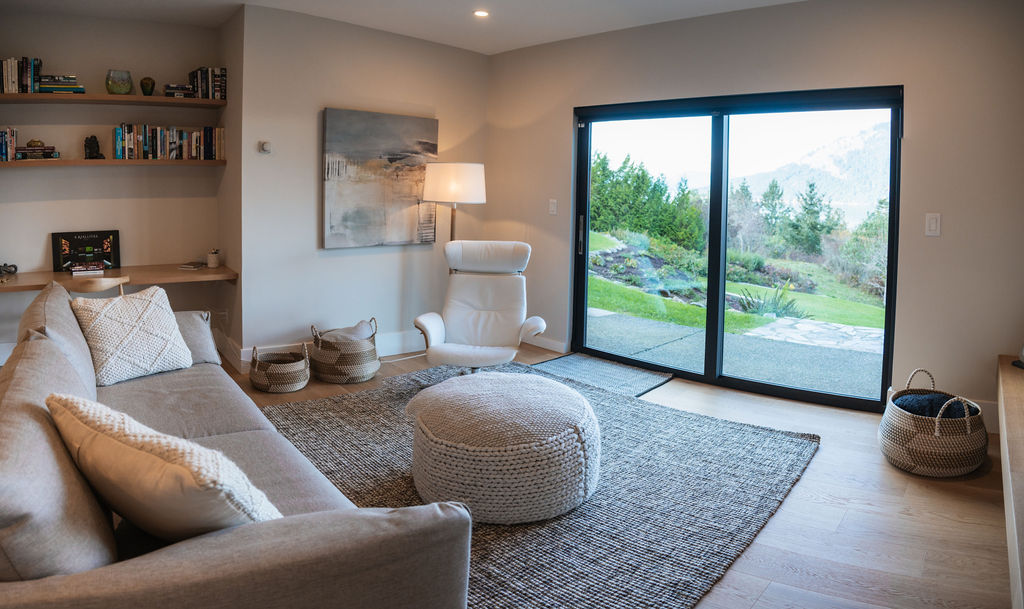
Small spaces feel larger through intentional choices:
- Light, neutral color schemes brighten the suite
- Recessed lighting instead of bulky fixtures
- Under-cabinet lighting in kitchens and wall-mounted sconces save space
- Multipurpose furniture with built-in storage
- Vertical space optimized with shelving near ceilings or over doorframes
Function matters in every design decision. Main living spaces should maintain a minimum width of 3 meters, wide enough to accommodate a fold-down bed, circulation space, and sufficient daylight. Hallways need a minimum finished width of 860mm (34″) for comfortable movement throughout the space.
A thoughtfully designed secondary suite balances technical requirements with spaces people actually want to live in. Focus on entrance placement, natural light, soundproofing, and smart space utilization. Create a secondary suite that serves both practical and aesthetic purposes for years to come.
Great homes grow from many small pieces.
Building Code and Safety Compliance
Safety forms the foundation of any secondary suite project. Building codes establish minimum standards that protect both property owners and occupants from potential hazards. These requirements aren’t bureaucratic obstacles, they’re essential safeguards built into every aspect of your build.
Egress and fire protection
Proper egress, the ability to exit quickly during emergencies, saves lives. Each bedroom in a secondary suite must have at least one window with an unobstructed opening of not less than 0.35 m² (543 in²), with no dimension smaller than 380 mm (15″). This window must be openable from inside without special tools or knowledge.
Windows opening into window wells require careful attention to clearances. New installations need at least 760 mm (30″) between the window and well wall. Existing window wells must provide a minimum clearance of 550 mm (21.5″).
Fire protection extends beyond exit pathways. Walls and ceilings shared between units require specific fire resistance ratings:
- 45-minute rating: Achieved with 15.9 mm (⅝”) Type X drywall
- 30-minute rating: Possible with 12.7 mm (½”) regular drywall, provided interconnected smoke alarms are installed
Doors within fire separations must be fire-rated and include self-closing devices. Furnace rooms need protection with 12.7 mm (½”) drywall on both sides of walls and ceilings to create a smoke-tight barrier.
Smoke and carbon monoxide alarms
Smoke alarms provide essential early warning during fires. They must be hardwired with battery backup, installed on each floor level, located in every bedroom, and positioned in hallways between bedrooms and the remainder of the floor.
The interconnection requirement matters most. When one alarm activates, all alarms throughout the house trigger simultaneously. This ensures everyone receives warning regardless of where a fire originates.
Carbon monoxide alarms are equally vital. Install them inside each bedroom or within 5 meters of bedroom doors, in common spaces when fuel-burning appliances are present, and near solid-fuel burning appliances like fireplaces. CO alarms must also be interconnected between units to provide comprehensive protection. These devices offer the only warning against this odorless, invisible gas that often emanates from furnaces, equipment frequently located near secondary suites.
HVAC and electrical systems
New secondary suites require independent heating and ventilation systems. This requirement stems from studies showing smoke can rapidly travel between units through shared ductwork during fires. Separate systems also prevent cooking fumes and other pollutants from traveling between units.
For pre-existing secondary suites where separate systems aren’t feasible, alternative approaches include installing additional interconnected smoke alarms in furnace rooms, adding relays to shut down furnace fans if alarms activate, and equipping heat ducts with fire dampers where they penetrate walls or ceilings.
Electrical safety deserves special attention in wet areas. Ground Fault Circuit Interrupters (GFCIs) are required near sinks and water sources to prevent electrical shocks. Arc Fault Circuit Interrupters (AFCIs) protect against electrical fires from damaged wiring.
Accessibility and health standards
Accessibility requirements establish minimum dimensions for comfortable movement within the space. Hallways and passages must maintain a clear width of 860 mm (34″). Ceiling height minimums reach 1.95 meters (78″), aligning with requirements for unfinished basements.
Additional accessibility standards may apply based on occupancy type and building characteristics, particularly in regions like British Columbia. These standards ensure spaces remain usable for people with varying mobility needs.
Health considerations influence ventilation requirements. Every bathroom and kitchen must have an exhaust fan vented to the exterior. Some municipalities require ventilation checklists to confirm adequate fan size, duct dimensions, and makeup air provisions.
These technical requirements work together as an integrated safety system. A qualified secondary suite contractor ensures your project meets these standards while integrating them seamlessly into your design vision.
Planning Your Investment, Fayze by Fayze
Financial planning forms the foundation of any thoughtful secondary suite project. Understanding costs and working with the right professionals transforms what could feel overwhelming into a manageable sequence of decisions.
The Swedish concept of “Lagom”, having just the right amount, applies perfectly here. Not too little planning, not excessive complexity. Just the right balance of preparation and flexibility.
Breaking Down Secondary Suite Costs
The investment required varies based on several factors, but basement suite renovations typically cost between $40,000-$70,000, averaging CAD $110-160 per square foot. This investment often pays for itself. A well-designed suite can increase your property value.
Great homes grow from many small pieces. Here’s how the budget typically breaks down:
- Kitchen: 10-15% of budget (CAD 7,663-19,855)
- Bathroom: 10-20% of budget (CAD 7,663-26,473)
- Utilities and systems: 15% of budget (CAD 11,495-19,855)
- Windows and exits: 0-20% of budget (varies by existing conditions)
- Living spaces: 10-20% of total project costs
- Permits and applications: CAD 1,393-6,966
For Victoria residents, rental income potential makes this investment particularly attractive. A one-bedroom apartment typically rents for $2,229-2,508 monthly, while two-bedrooms command $2,647-3,065. Those monthly returns add up over the decades.
Finding Your Secondary Suite Contractor
Selecting the right contractor shapes everything that follows. Beyond cost considerations, seek professionals with specific secondary suite experience who understand local building codes and permitting processes.
We recommend verifying five key areas before hiring:
- Their track record with secondary suites
- Proper licensing and insurance
- Familiarity with local regulations
- Clear communication practices
- Detailed quotation processes
A qualified contractor handles permits through inspections while ensuring your renovation complies with building codes. Throughout construction, maintain regular communication and be available to address questions that arise. Some clients want close collaboration on every decision. Others trust their contractor to execute the vision from beginning to end.
Preventing Common Mistakes
Rushing into construction without adequate planning leads to costly corrections. Begin planning at least six weeks before finalizing decisions to prevent last-minute complications.
Common pitfalls include:
- Underestimating costs: Research thoroughly and include permit fees, application costs, and maintenance expenses in your budget
- Skipping permits: This can result in substantial fines and potentially force removal of your suite
- Choosing contractors based solely on price: The lowest bid often leads to quality issues and unexpected expenses
- Neglecting waterproofing: Essential in basement suites to prevent moisture problems
- Overlooking sound separation: Poor soundproofing between units leads to ongoing tenant complaints
Each fayze of our process is designed around clear timelines and your comfort level with spending. When they come together, the entire construction experience feels well built.
Contact us for guidance on creating your secondary suite within budget while avoiding common renovation pitfalls.
Planning for Long-Term Use and Value
A secondary suite represents more than immediate housing needs. This investment adapts to your changing circumstances while building lasting value into your property.
Rental income potential
Financial returns extend well beyond construction costs. Rental income from your suite helps offset mortgage payments and property taxes. Lenders often factor this supplemental revenue into qualification calculations, improving your borrowing capacity. Victoria’s rental market supports these returns, one-bedroom apartments typically rent for CAD 2,229-2,508 monthly, while two-bedrooms command CAD 2,647-3,065.
These numbers represent steady income that accumulates over years. Additional upfront investments in quality construction and systems reduce maintenance costs while maximizing rental appeal. That way, your suite generates reliable returns while requiring minimal ongoing attention.
Multi-generational living
The need for flexible family housing continues growing. Across Canada, multi-generational homes have increased by 45% over the past twenty years, reaching almost one million homes in 2021. Secondary suites provide private living spaces for aging parents, adult children, or extended family members while preserving independence for everyone.
This arrangement creates both emotional and financial benefits. Family connections strengthen when loved ones live nearby, while shared household expenses reduce costs for all residents. Many homeowners build these spaces specifically for family needs rather than rental income, finding the emotional returns equally valuable.
Future resale value and flexibility
Homes with legal secondary suites appeal to broader buyer pools and typically sell for higher prices. Finishing a basement can increase property value by as much as 70%. Even without rental income, the additional living space makes properties more attractive to potential buyers.
Most importantly, secondary suites adapt to changing needs throughout your ownership. Today’s rental unit becomes tomorrow’s home office, guest accommodation, or family space as circumstances evolve. This flexibility ensures your investment remains relevant regardless of how your lifestyle changes.
Great homes grow from many small pieces.
Building for Tomorrow
A secondary suite represents more than additional square footage. It creates possibilities, for rental income, family connections, or simply a home that adapts as your needs change over time.
We’ve walked through the essential elements: understanding regulations, meeting safety standards, designing for light and privacy, budgeting wisely, and working with qualified professionals. Each step builds toward a space that feels deliberate rather than makeshift.
The investment, typically CAD 41,800-55,734 for basement suites, pays dividends through rental income potential of CAD 2,229-3,065 monthly in Victoria’s market. More importantly, it adds lasting value to your property and flexibility for your future.
Great homes grow from many small pieces. A thoughtfully planned secondary suite becomes part of your property’s story, accommodating changing circumstances while maintaining the character of your neighborhood. Whether for aging parents, adult children, or rental income, these spaces serve different purposes throughout your homeownership journey.
The care invested during planning and construction yields benefits for decades. When regulations are followed, design is thoughtful, and construction is meticulous, you create not just additional living space, but genuine comfort for future occupants.
Your secondary suite project deserves the same attention to detail, foresight, and craftsmanship that defines quality home building. Built to last, built to live in, built to feel like home.
Key Takeaways
Building a secondary suite is a strategic investment that can generate rental income, accommodate family needs, and significantly increase your property value while navigating specific legal and design requirements.
• Verify zoning compliance first – Check local regulations and obtain all required permits before starting construction to avoid costly corrections or forced removal of your suite.
• Prioritize safety and code compliance – Install proper egress windows, interconnected smoke alarms, fire-rated separations, and independent HVAC systems to protect occupants and meet building standards.
• Design for privacy and comfort – Create separate entrances, maximize natural light, implement effective soundproofing, and use space-efficient layouts to ensure livable, attractive spaces.
• Budget CAD 41,800-55,734 for basement suites – Factor in permits, utilities, kitchen, bathroom, and professional contractor costs, with potential rental income of CAD 2,229-3,065 monthly in markets like Victoria.
• Plan for long-term flexibility – Secondary suites adapt to changing needs over time, serving as rental units, multi-generational housing, or guest spaces while increasing property resale value by up to 70%.
A well-executed secondary suite project requires careful planning, professional expertise, and attention to both regulatory compliance and design quality to maximize its potential as a valuable, versatile addition to your property.
FAQs
Q1. What is a secondary suite and how does it differ from other housing units?
A secondary suite is a self-contained living space within or attached to a primary dwelling. It includes a separate entrance, kitchen, bathroom, and sleeping area. Unlike duplexes or separate units, a secondary suite remains part of the same property as the main house and cannot be legally subdivided.
Q2. What are the main types of secondary suites?
The most common types of secondary suites are basement suites, garden suites, and laneway houses. Basement suites are located below the main floor, garden suites are detached structures in the backyard, and laneway houses are positioned along the back lane of a property.
Q3. What are the key legal requirements for building a secondary suite?
Legal requirements typically include obtaining proper zoning approval, securing necessary building permits, adhering to local building codes, and passing inspections. Specific regulations vary by municipality but often involve separate entrances, fire safety measures, and size restrictions relative to the main dwelling.
Q4. How much does it typically cost to build a secondary suite?
The cost of building a secondary suite varies, but basement suite renovations typically range from CAD 41,800 to 55,734. This investment often includes expenses for kitchen and bathroom installations, utility upgrades, and necessary structural modifications. The exact cost depends on factors like suite size, existing conditions, and local market rates.
Q5. What are the long-term benefits of adding a secondary suite to your property?
Adding a secondary suite can provide multiple long-term benefits. These include potential rental income to offset mortgage costs, increased property value, flexibility for multi-generational living arrangements, and enhanced appeal to future buyers. A well-designed suite can adapt to changing needs over time, serving various purposes throughout your homeownership.
The verdict
Building a home in Victoria is an exciting process – whether its a a secondary suite, or a full custom home – allowing you to lead with your vision to tailor every decision to your lifestyle and personal preferences. The homes we build will live on with their occupants and should offer them space to age gracefully and comfortably in the home.
Let’s build your dream house together.
Schedule an initial consultation so we can better understand your needs and motivations, and plan the next steps.